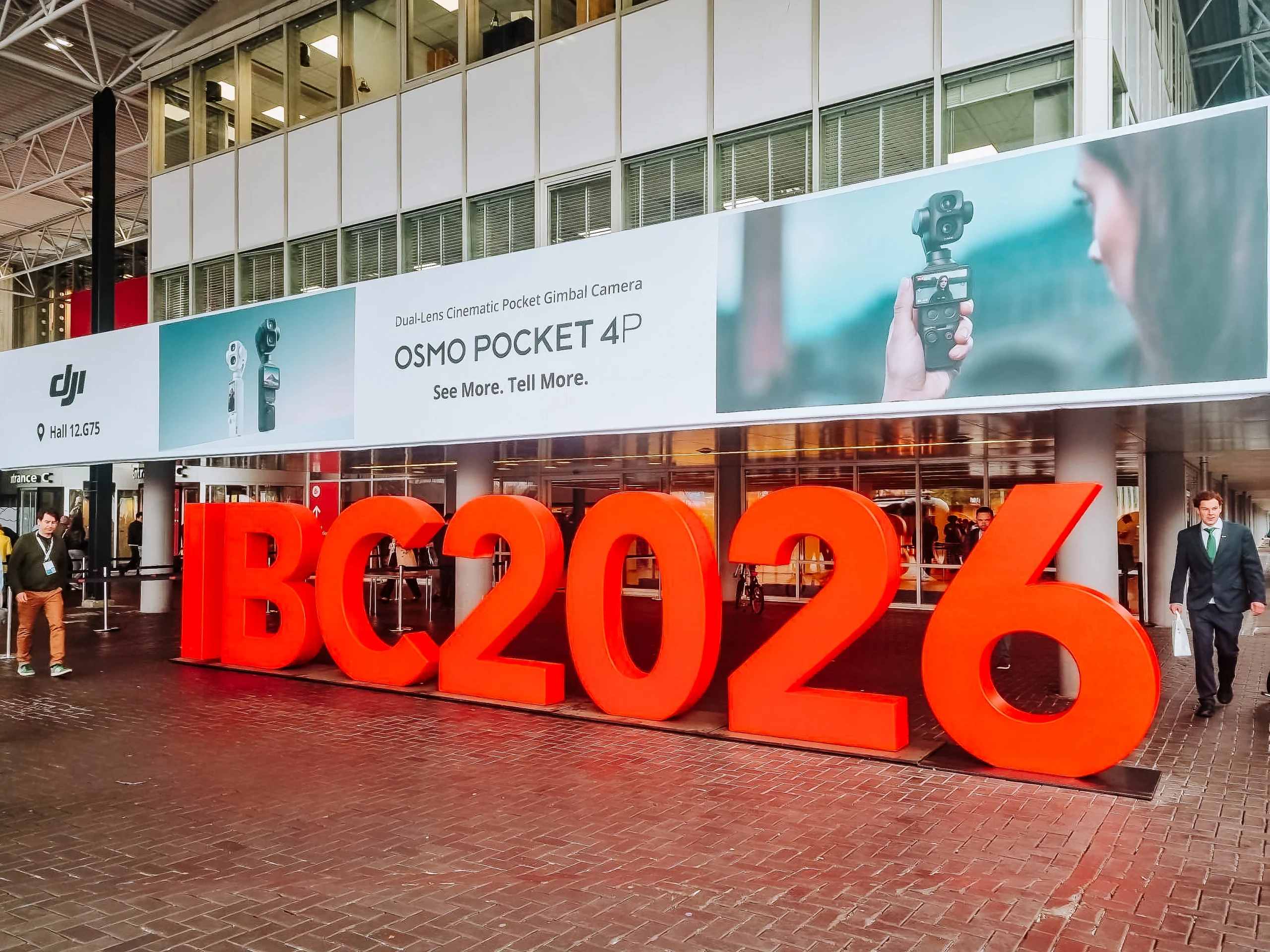
For four days in September, the global media and entertainment industry once again came together at RAI Amsterdam for IBC. As one of the industry’s major annual meeting points, the show offers a useful snapshot of where technology, business priorities and customer expectations are heading, bringing together broadcasters, operators, technology providers, content companies and partners from across the ecosystem.
For AgileTV, IBC 2026 was an opportunity to continue conversations with customers and partners, demonstrate the latest developments across our TV, CDN and operational technology, and explore where the market is heading next. From unified TV experiences and smarter operations to content delivery, security and new opportunities in hospitality, our presence this year reflected a broader question facing the industry: how can increasingly sophisticated TV environments become easier, more efficient and more commercially sustainable to operate?
The show itself felt somewhat different from previous editions. Attendance was noticeably quieter toward the end of the event, with Friday and Saturday generating the strongest activity and Monday considerably quieter across the halls. Yet the conversations remained highly focused, with customers, prospects and partners coming to the AgileTV booth with many specific projects, challenges and opportunities to discuss.
Several themes came through repeatedly in those conversations.
AI is becoming part of the technology stack
Perhaps the clearest change from previous years was the way AI was discussed. AI was everywhere at IBC, but increasingly as something that needs to deliver a practical result rather than simply as a headline.
Conversations focused on what AI can actually do today, from improving content discovery and personalization to automating operational tasks, supporting troubleshooting, analyzing data and helping teams work more efficiently.
This was particularly visible across the AgileTV booth. Our teams demonstrated AI use cases in areas including CDN configuration, operational management, content metadata and automatic speech recognition. The response was especially strong to the AI assisted configuration capabilities within CDN Director, while our ASR demonstrations also generated significant interest around the combination of translation and live editing.
The takeaway was clear: the most valuable AI applications are not necessarily the most futuristic ones. They are the ones that can remove manual work, improve an existing process or help teams make better decisions.
Efficiency is becoming as important as innovation
Across both broadcast and service provider conversations, efficiency and cost optimization were high on the agenda.
The industry is operating in an environment where budgets are under pressure, while the complexity of delivering television continues to increase. Operators are managing more devices, platforms, services, content sources and distribution channels without necessarily wanting to expand their operational teams at the same rate.
As a result, the question is increasingly shifting from what new technology can we add? to how can technology help us operate the business more effectively?
That was reflected in conversations around automation, modular architectures, cloud and hybrid deployments, energy efficiency and smarter resource management. It was also apparent in the way customers evaluated solutions. Features remain important, but they are increasingly expected as standard, with buyers looking more closely at measurable business impact, operational effort and return on investment.
The TV experience is expanding beyond the traditional interface
The TV experience is also becoming broader. Aggregation, personalization and content discovery remain important, but conversations increasingly centered on creating a consistent experience across applications, set top boxes and other devices.
Customers are looking for experiences that feel connected rather than treating every screen or service as a separate environment. This is particularly relevant as operators consider how television fits into a broader connectivity and entertainment proposition.
Video is increasingly being discussed alongside broadband, mobile, digital services and customer experience rather than as an isolated product. The larger question is how video can support a broader commercial relationship with the customer and contribute to the overall value of the service.
Standard features are becoming less of a differentiator
Another recurring theme was the increasing similarity between competing solutions.
Across areas such as TV platforms and CDN technology, many fundamental capabilities are now well established. Multi CDN, analytics, security, monetization and content management are widely available across the market, meaning differentiation increasingly comes from how these capabilities are brought together, how easily they can be operated and what business outcomes they enable.
In CDN discussions, there were few signs of a major new competitive direction emerging this year. Established players continued to emphasize areas such as analytics, monetization, multi CDN, CDN as a service and security, while newer approaches such as Media over QUIC are gradually moving from experimentation toward practical implementation.
Modularity, containerization, cloud and hybrid deployment models, and energy efficiency were also visible across the ecosystem, reinforcing the broader move toward flexible technology stacks.
Content delivery and security continue to converge
Operators are looking for greater flexibility in how content is distributed while facing increasingly sophisticated security and piracy challenges. Multi CDN orchestration, traffic optimization, analytics and content protection are therefore becoming increasingly interconnected parts of the same delivery strategy.
At IBC, conversations around AgileTV’s CDN capabilities reflected this convergence. Visitors showed strong interest not only in the AI assisted configuration of CDN Director, but also in security use cases and the potential to use the platform in different operational scenarios.
There was also interest from potential partners in CDN Director as a standalone opportunity, reinforcing the broader trend toward modular technology that can address specific operational requirements without requiring an organization to replace its entire technology stack.
Hospitality is becoming an increasingly interesting video opportunity
One of the more notable themes from our conversations was the interest in hospitality and enterprise video, particularly across Latin America. Discussions with several leading operators and technology companies highlighted consistent interest in solutions that can extend video beyond the traditional residential market.
As operators look for new sources of revenue and ways to diversify their business, hotels, hospitals and other enterprise environments can provide a natural extension of their existing connectivity and video capabilities.
The conversations also highlighted that technology alone is not enough. Particularly in price sensitive markets, customers need business models that make commercial sense, limit upfront investment and provide flexibility as the opportunity develops.
The human side of IBC still matters
For all the conversations around AI, automation and increasingly sophisticated technology, one of the strongest impressions from IBC was a much more traditional one: people still make the difference.
The AgileTV booth was busy with customers, prospects, partners, media and friends throughout the strongest days of the show. Its open location and welcoming design made it easy for visitors to find us and created an environment where conversations could continue beyond a scheduled meeting.
Having specialists from across the business readily available also allowed discussions to go deeper, while the presence of senior leadership was particularly valuable for strategic conversations with customers from Latin America and other markets.
That human element is one of the reasons events such as IBC remain important. A product demonstration can happen remotely and a technical document can be shared online, but sitting down with a customer, understanding what is happening in their market and discussing a problem in detail remains difficult to replicate elsewhere.
A format that could evolve
IBC remains an important event for the industry, but this year’s attendance pattern also raised some questions about the format.
The quieter final days were noticeable across the show floor, and there was a sense that the traditional four day schedule may no longer reflect how people actually use the event. A more concentrated three day format could potentially create a stronger sense of momentum while making it easier for international visitors and exhibitors to plan their time.
At the same time, the continued interest in areas such as hospitality, AI and operational technology shows that there is plenty of room for the event to evolve alongside the industry it represents. As the boundaries between broadcast, streaming, connectivity, enterprise video and technology continue to blur, IBC has an opportunity to bring even more of those conversations together.
Looking ahead
If there was one message we took away from IBC 2026, it was that the industry is becoming more pragmatic.
AI is moving into real applications. Customers are looking more closely at efficiency and ROI. Standard features are becoming less differentiating. Modular architectures are gaining importance. Video is increasingly part of a wider connectivity and customer experience strategy, while opportunities such as hospitality are opening new paths for operators.
None of this means innovation is slowing down. It means the industry is becoming more demanding about where innovation creates value. The conversations at IBC were increasingly about what technology should do, how it should be operated and whether it can make a measurable difference to the people and businesses using it.
For everyone at AgileTV, it was a pleasure to be part of those conversations. A big thank you to our customers, partners, colleagues, friends and everyone who stopped by the booth, joined a meeting, watched a demo or simply came over for a chat.
IBC remains one of the industry’s most important meeting points, and we are already looking forward to continuing these conversations over the coming months and, of course, returning to Amsterdam next year.